
Architectural Considerations for Lutron in Orange County, CA Homes
Published 2/12/2026
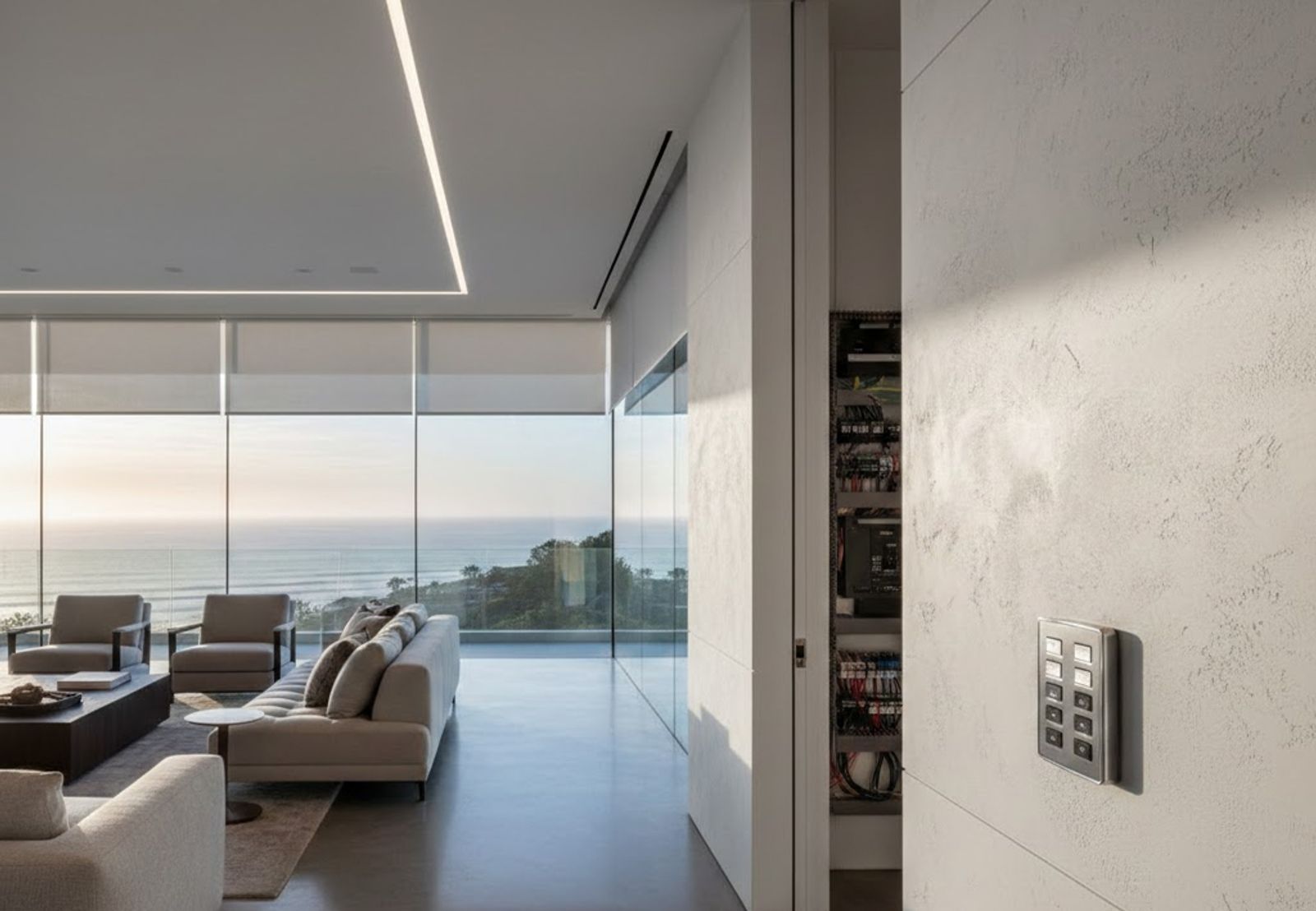
Integrating Lutron lighting and motorized shading systems into a custom home is about more than wiring and control—it’s about designing with intention. In the luxury homes of Orange County—from the modern glass homes of Laguna Beach to the hillside estates of Newport Coast and the refined builds of Corona del Mar—planning for Lutron early in the architectural process ensures technology supports the vision, rather than disrupting it.
At Oasis Smart Homes, we collaborate closely with architects, designers, and builders to ensure that Lutron HomeWorks systems are seamlessly incorporated into the form and flow of the home. Here’s what every architect and homeowner should consider when designing with Lutron.
1. Lighting Control Layouts: Less Clutter, More Impact
Luxury homes deserve clean, uncluttered walls. Traditional light switches for every fixture can break up beautiful materials and architectural symmetry. With Lutron:
- Keypads replace multiple switches with one elegant interface
- Rooms are divided into scenes, not circuits
- Controls are planned alongside cabinetry, artwork, and doorways for seamless integration
We work with your floor plan to reduce visual noise—while increasing functionality.
2. Preplanning for Shade Pockets and Recessed Tracks
For motorized shades to disappear into the ceiling when not in use, we need to plan for structural pockets during framing. This includes:
- Coordinating with ceiling joists and HVAC layouts
- Selecting shade hardware early for proper dimensions
- Creating access panels where needed for future service
In homes with floor-to-ceiling windows—common in Laguna Beach and Corona del Mar—hidden roller shades preserve uninterrupted views while delivering privacy and solar control.
3. Fixture Selection and Load Types
Architectural lighting fixtures—like linear LEDs, wall grazers, or cove lighting—must be compatible with Lutron dimming protocols. That means:
- Specifying dimmable, high-CRI fixtures
- Using ELV, 0-10V, or DMX dimming where appropriate
- Coordinating drivers and loads to match Lutron panel requirements
We work with your lighting designer or provide in-house lighting planning to ensure every fixture performs flawlessly.
4. Electrical Panel Location and Wiring Coordination
Lutron HomeWorks systems require centralized dimming panels and low-voltage wiring throughout the home. Proper architectural planning ensures:
- Dedicated space for control panels (often in mechanical or tech closets)
- Clean wire pathways for power and data
- Integration with the home’s broader automation and electrical systems
As licensed electricians and system integrators, Oasis Smart Homes handles this under one roof.
5. Control Locations That Align with the Architecture
Rather than retrofitting control locations after framing, we coordinate:
- Keypad height, alignment, and wall finishes
- Placement near room entries, seating areas, and feature walls
- Sightlines and access for both aesthetics and usability
In high-end homes with custom millwork, stone, or plaster walls, this level of coordination is essential to preserve design intent.
6. Shade Design and Fabric Coordination
Architects and designers should select motorized shade solutions that complement interior finishes, light levels, and window geometry. We help specify:
- Roller vs. Roman vs. drapery track systems
- Dual shade systems (e.g., blackout and sheer)
- Fabrics that blend with materials and color palettes
All while considering how the sun moves through the home seasonally.
7. Future-Proofing and Upgrade Paths
Planning with Lutron means your home is ready for the long term. We design:
- Systems with capacity for future rooms or scenes
- Upgrade paths to support evolving technology
- Service access that protects finishes and structure
This is especially important for multi-phase builds or vacation homes used seasonally.
FAQ: Lutron Architecture Planning in Orange County
When should architects involve a Lutron integrator?
As early as possible—ideally during schematic design or electrical planning. Early coordination avoids compromises later.
Can Lutron be designed without impacting ceiling height or finish?
Yes. With proper framing and coordination, Lutron shades and fixtures can be recessed without sacrificing ceiling height or trim details.
Who handles the installation?
At Oasis Smart Homes, we handle everything: system design, documentation, prewire, panel installation, programming, and client training. We also coordinate with your builder and trades throughout the project.
Partner with Oasis Smart Homes Early in the Process
By thinking about Lutron from day one, you’ll achieve a more cohesive, elegant, and functional home. Our team ensures that lighting, shades, and control are woven into the architecture—not layered on afterward.
Call our Scottsdale studio at (480) 907-7095 or our Orange County studio at (949) 210-9440 to schedule your private smart home consultation!